
His Father’s Iteration: Fiction from CG Inglis, Part 9
Sci-Fi-O-Rama presents the ninth installment of “A Colour Like Orange: Stories from a Broken World“, a series of interlocking stories from Toronto writer CG Inglis.
Kel works a skiff on the central canal, serving up steaming bowls of noodle soup to the Capital’s bustling crowds. Left to care for his younger brother after the death of their father, he struggles to maintain the family’s traditions in an adopted home that is growing increasingly unwelcome.
To tell Kel’s story, CG Inglis expands the world of “A Colour Like Orange” like never before. Travel back to the rough days of the Capital’s founding, and across the sea to the low continent with its masks and dreams in “His Father’s Iteration“.
–
The artery, the great canal that cleaves a line across the western half of the capital, is older than the city. Historically, the wealth of the inner territories was wheat, but the meandering course of the river had always made shipping difficult, and the canal was conceived as a more efficient means of transporting the harvest to the sea. It was built cheaply, blasted and hauled out of the ground by migrant workers. Several rough camps were established at its head, and a marketplace, and for years people lived and died alongside the lengthening pit of earth.
The conditions were hard. Some workers were housed in rough shelters of felled timber, but many others endured the biting cold of winter under a thin layer of tent canvas. The summer months were little better, as the warm weather brought with it swarms of insects, and disease. The job itself was back-breaking. Building techniques were crude, and accidents common, but if an explosion or rock slide claimed the life of one man, or a dozen, there were always willing replacements; the outlying farms had no shortage of second sons, and the promise of a paying job cast a wide net throughout the provinces. Work continued, and the dead were hastily buried under the canal or along its banks. No graves were erected. Their only memorial is the line of black water they helped to carve between the river and the sea.
By the time the project was completed, the camp at the head of the canal had grown into a small village. The workers called the place Harelle, which in their dialect meant a hearth, or the seat of a flame. From their comfortable homes at the port, the project’s managers and their financial backers sneered at the muddy streets and ramshackle houses of Harelle, but as the grain barges that plied the canal sent money flowing inland from the sea, potential was glimpsed in development. Overnight, the authorities deemed the village an illegal encampment, and those residents who would not agree to a settlement had their meagre possessions seized, and watched as fire was set to their homes. On the cleared earth, warehouses sprouted, and later factories of red brick with slender, smoke-blackened chimneys. A second wave of immigrants arrived to mill the grain and operate the machines, but as the land they occupied grew increasingly valuable, they too were pushed out, this time by means of spiraling rents and the officers of the court dispatched to arrest any of those unable to pay them.
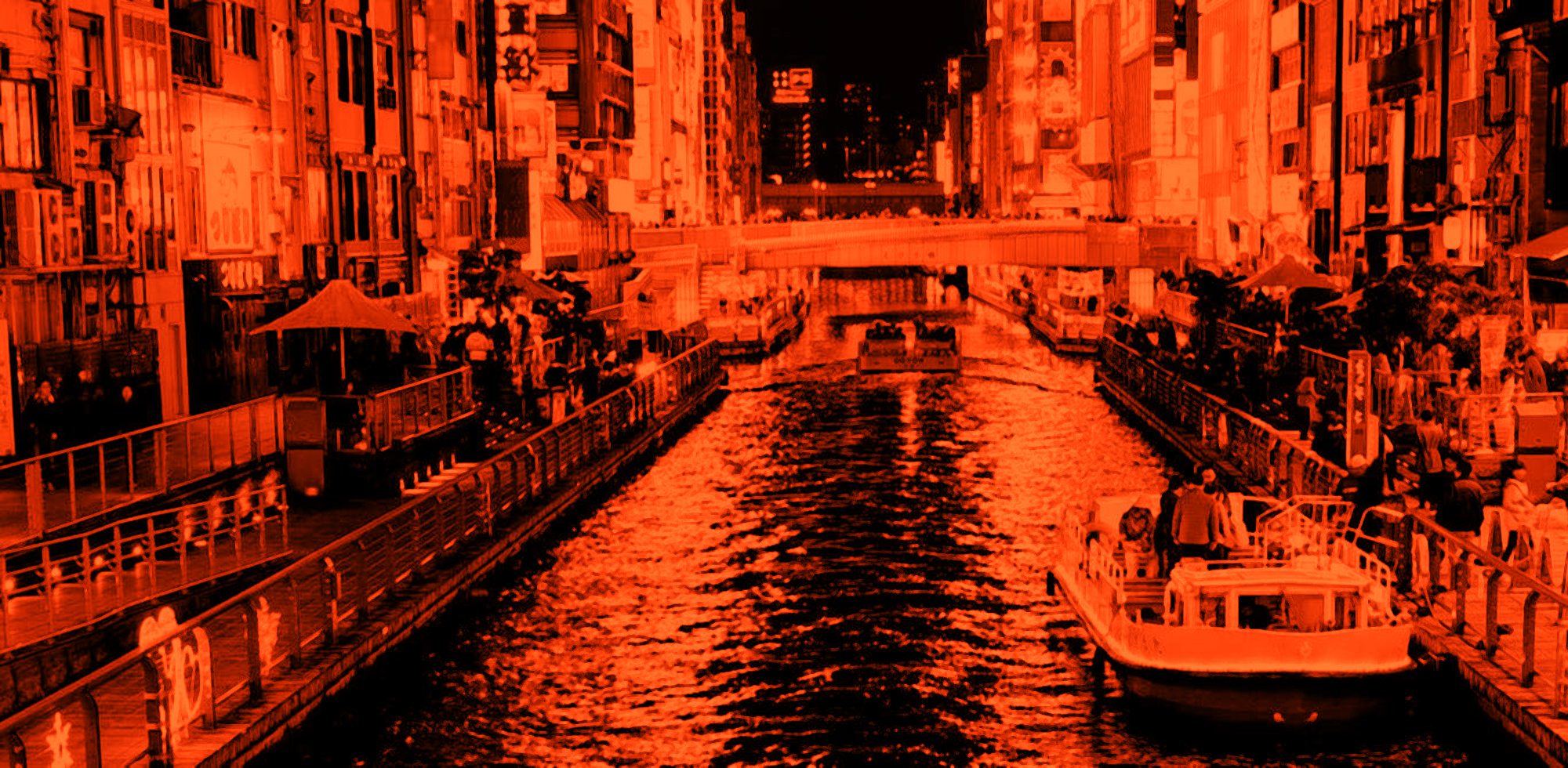
Paved roads appeared, and one by one the tenements of the poor were replaced by well-built homes and stately offices. The governing seat was moved to the newly incorporated city, and people began referring to the place as the capital. When the first rail lines were laid and the shipping trade diminished, bridges were constructed to span the canal. In time, the area around the Wine Seller’s bridge would form the capital’s bustling heart, a tangle of theaters and drinking halls and open-air markets. Where once there had been smoke and the din of industry, now the light of crimson lanterns painted the canal, and night after night laughter rang out over the silent water.
The city that grew around it was a sprawling, omnivorous thing. First the surrounding forests were lost, and then the fields of wheat, as one by one housing projects swallowed the countryside. Much of the growth was fueled by another wave of immigration; on the low continent, cyclical famines and the civil unrest they inspired had led to an influx of migrants from across the greater sea. Along with their labour, these people brought with them their religion, language, and cuisine. Of the three, their gods and their sharp, musical accent were tolerated, but the food was greedily welcomed. The most popular dish was a bowl of fried noodles dropped without ceremony into a hearty broth, the stock of which was a closely guarded secret, but amounted to little more than pork bone and salt. Given the cost of rent in the district, a few enterprising cooks began operating small, floating restaurants in skiffs moored along the canal’s banks. These proved to be incredibly popular, and within the span of a few years the space between the Wine Seller’s bridge and the Avenue of Parades was crammed with skiffs docked keel to stern.
The capital was used to newcomers, but not from so foreign a culture. The people of the low continent, with their pantheon of gods and obscure traditions, were viewed as backwards, and unwilling to assimilate. Increasingly, there had been talk of restricting their numbers; the city was full, went the common complaint. It belonged to those who had built it. Compounding the issue was the discovery that the world itself was porous. It appeared that there were in fact innumerable worlds: parallel universes, alternate realities, and that some of these were already filtering in through the cracks. The government balked; the economy faltered, and the murmurs of a discontented population flared into an angry nativist movement. They demanded the city closed, denying entry to all outsiders, and took as their symbol a black circle on a white field; it represented the sealed border, a wall that would not break. A number of protests, many of them violent, erupted across the city. Thus far, the artery had been spared the worst of the demonstrations, and from the vantage point of a dining skiff on the great canal, looking out over the water with a steaming bowl of soup in hand, such troubles could appear very far away.
In one of these skiffs was a young cook. His name was Kel, and he had been serving food on the canal since he was old enough to help his father prep the stock. Now a tall youth with dark hair and long limbs, he picked at his teeth with a sliver of wood as he watched his younger brother Gani sleep. Just beyond the makeshift kitchen, the boy was curled in a nest of blankets. Worry creased his narrow forehead, and from time to time an arm twitched as he struggled against his dreams.
Once more Kel experienced a pang of guilt that his brother was growing up this way; he knew firsthand that the deck of a dining skiff was not a proper bedroom. Kel longed to be able to send his brother home, but the restaurant did its best business between sunset and midnight, and there was no money to pay anyone to watch him. Not that Gani particularly needed watching – the boy had always been an uncommonly heavy sleeper. Not even the noise and commotion of the great canal could disturb him. Once he’d spent the night alongside a party of drunken businessmen, only rolling onto his side and dragging a blanket over his head as a heated argument broke out and the skiff was sent bucking and bobbing in the resulting shoving match. Even so, Kel wasn’t about to leave an 11 year old alone in an empty apartment. Gani was his responsibility. He was all the family the boy had left in the world.
The familiar dip and bounce of the skiff pulled Kel from his thoughts; he turned to see a man in a suit lowering himself from the ladder and into the boat. Floundering somewhat, unsteady on his feet and offering a broad, apologetic smile, the man at last managed to sit down on the bench nearest Kel. He had a large frame, and when he leaned forward his prominent gut rested like a barrel between his thighs. Sweat was beaded on his brow, and the blush of alcohol showed in his cheeks. He beamed at Kel, taking in the skiff and its small kitchen with wide, kindly eyes.
“Welcome,” Kel said.
“Thank you,” the man answered, a little breathlessly.
“What can I get you?”
“A bowl,” the man replied. “Large. And a beer? I guess I could have another.”
He rubbed two meaty hands together, sniffing loudly as Kel retrieved a beer from the small fridge in the prow. Placing the cap against the gunwale, Kel popped it from the bottle with one short, swift smack of his palm. He tilted the mug and poured, sending the golden liquid frothing up the side of the glass. With both hands he passed the mug to the customer and set to frying the noodles. From over his shoulder he asked if the man wanted vegetarian or beef. The customer was finishing a long swallow of beer. He belched loudly.
“Beef,” he replied. Kel nodded. He placed several thinly sliced strips of pink meat into the bowl, along with the noodles and ladleful of steaming, amber broth. Garnishing this with basil and a few split chilies, he passed it to the customer. The big man raised the bowl before drinking, thanking Kel in the traditional manner. The gesture caused Kel to lower his eyes; he did not want the customer to notice his disdain. It had become something of a trend for the people here to ape the ways of the low continent, believing that doing so was proof of an open mind, but to Kel a gesture without meaning was hollow, the lowest form of flattery.
From his nest in the stern, the boy muttered and turned in his sleep. The customer glanced up from his soup.
“Who’s that?” he asked. Kel scanned the question for sarcasm, though the man’s tone seemed plain enough.
“My brother,” he replied. “Gani.”
“How old is he?”
“He is 11 years old,” said Kel.
“My son Adam is 9.”
Kel nodded. Although he prided himself on his hospitality, it only extended so far; in exchange for enduring the slights and small indignities that came with serving a nightly procession of drunks and tourists, he kept something for himself. He wore a welcoming smile, and kept his true face hidden, but now the mood between the two men had lightened. They shared a companionable silence. The customer worked on his food with clear enjoyment. When he finished the beer, Kel took the mug and with a soft gesture inquired if the man wanted another. The customer assented, and watched in appreciation as Kel re-enacted the same ritualized pop and pour. The bench creaked as the big man leaned back in satisfaction. He was admiring the wooden mask that was lashed to a pole at the back of the skiff. Ovoid, with open eye-slits and protruding lips, a wide crack ran through the wood across the mask’s broad forehead. As if standing guard, its mild expression hovered in the space above the sleeping boy.
“An iteration mask,” the big man said, stating the obvious. Kel was used to answering questions about it. The religion of the low continent was not well understood here. People knew of the iterations, and the massive festival plays that took place in the towns and villages each year, but to the rational mind of the capital, the masks appeared quaint, mere props in an elaborate game of dress up. But the costumer continued:
“Irdan?” he asked. Kel looked at the man in surprise. The guess had been a shrewd one.
“Barran,” he replied. “But yes, a secondary iteration of Arden. You have studied the masks?”
The big man shrugged and smiled. He was simply, childishly pleased.
“I find your religion fascinating,” he said.
“It was my father’s religion,” Kel answered. “I keep the mask to remember him.”
“He’s gone in then?”
Kel’s eyes widened; very few people here used the correct translation when speaking of death. Most preferred the common expression “passed on”, but for true believers like Kel’s father, death was seen as a leap, a dive headfirst into the vast ocean of being.
“More than a year ago now,” Kel said, and for a moment his emotion slipped its leash; his voice trembled, and he looked away. Out of respect, the big man turned his gaze southward. Past the Salt Seller’s bridge a column of smoke was rising.
“Another protest,” the customer muttered. There was honest remorse in his voice. Kel turned to him.
“Not everyone here is like you,” he said.
They were quiet awhile. Gani stirred again, and together the two men watched the boy sleeping in the stern. When the customer at last took his leave and Kel had cleared away the dishes, he found the man had left a generous tip. Briefly, he raised the money in both hands, and then he folded the bills into his pocket.
–
The next day, Kel roused his brother for school. He had prepared a breakfast of rice porridge, Gani’s favourite, but the boy only picked at his food. Sleep clung to his eyes and squatted in his body. He sat with hunched shoulders, relying on the table to prop himself up. Kel sipped his tea, amused at the way his brother pushed the spoon around in his rapidly cooling porridge. Kel had been like that when he was young, rarely waking with an appetite, and then all at once overtaken by a great and ravenous hunger before noon. He was sure Gani was the same.
“Something on your mind?” Kel asked him. His brother shook his head, and then all in a rush, he spoke up:
“Dad was in my dream,” he said. The admission appeared to startle him. He pushed the bowl of porridge away in frustration. Kel struggled to keep his doubt from showing on his face.
“Did he speak with you?” he asked.
His brother’s heavy nod caused several thick strands of hair to fall into his eyes.
“Tell me about it,” Kel prodded.
“You don’t believe in dreams,” Gani muttered.
“I believe you had a dream, and hearing about it will be more interesting than watching you play with your food.”
That prompted a smile.
“Alright,” his brother said. “It was nighttime. The lights and the billboards and everything were super bright, but there was no one there. The streets were empty and so were all the skiffs. I was alone. It was really quiet. I could see some smoke coming from our skiff though, and dad standing at the stove.”
“Was he trying to cook?”
Kel kept his tone purposefully light, but it was clear his brother was serious. The dream must have been one of those that in their language was called hassab, one that seems realer than life. Gani shook his head.
“He was just standing. He looked like he was thinking hard, his brows all scrunched together. I didn’t want to bother him.”
“That was one of his favourite expressions.”
Gani laughed.
“You’re right! But he was happy to see me.”
“Of course. It’s been more than a year.”
The boy was warming to the subject now. He dragged the bowl back across the table and took a large spoonful of porridge into his mouth. Swallowing, he continued:
“He asked if we were going to temple, so I lied and said yes. Maybe he knew I was lying, because he asked if I remembered the name of his iteration. It’s Barran, I told him. But he sighed and said that wasn’t a good answer.”
“Couldn’t have been dad then,” Kel cut in. “He carved the mask himself. It’s definitely Barran. He used to bore me to tears with that story.”
“He never told it to me,” Gani said.
“Never?”
Kel was genuinely surprised. Their father had loved telling stories, and this had been one of his favourites.
“Never. I’d remember. I loved hearing his stories.”
“What else did he say?”
“He said we’re sleeping. He meant you and me. We’re forgetting what’s important, he said, and Barran is just a sound to us now. Dad wanted me to tell him what the name means. It’s something like ‘waiting’ isn’t it?”
“Almost. They translate it as ‘long patience.’”
“Well he said I should remind you about it. Said we had to wake up. So I woke up.”
Kel said nothing. In a small voice, the boy went on:
“You think it was really him?”
Kel avoided his brother’s eyes. Dreams were sacred to their people, offering a window into countless other worlds, including the realm of the dead. At times, a deceased loved one might cross the border into the sleeping minds of those they’d left behind. To Kel, who had lost his mother and father, the thought was less comforting than painful. He despised his parents’ religion for the way in which it preyed on people’s fears, offering sweet-sounding platitudes and false hope. Science may have proven the existence of other worlds, but none were like those he’d heard about as a boy; a person’s dreams were nothing more than images dredged up by their unconscious mind. Thinking otherwise was like choosing to believe in children’s stories. Kel stood up and removed the bowl of porridge from the table, walking across the small kitchen to the sink.
“An interesting dream,” was all he said.
“I guess,” the boy admitted. “But when I got up this morning I couldn’t find the mask.”
“What do you mean?”
“It wasn’t here.”
A wave of anxiety passed through Kel; he was already moving from the kitchen and into the hall. The hook where their father’s mask should be was empty. He hadn’t brought it home. He closed his eyes, and forced himself to count three long, controlled breaths. He couldn’t believe he’d forgotten it. He’d been tired after work, and Gani had fussed and complained when Kel woke him, but it wasn’t an excuse. He had to do better than this.
“I must have left it on the skiff,” he said, returning to the kitchen. His brother looked worried.
“Won’t someone take it?”
“It’ll be alright,” Kel assured him, doing his best to keep his voice level. “Now come on. It’s time for school.”
Reluctantly, Gani pushed himself up from the table.
“It was good to see dad though,” he said, thoughtlessly, as a person throws away an empty packet after eating the contents, but the words fell on his brother like stones.
–
Their father Gess had been a carver. On the low continent that title held a special significance. While cheap replicas of the most popular iterations could be found at any market, only a true carver was qualified to fashion the masks used in festival plays. What’s more, he had been called to the work in a dream. To the people of the low continent, there was great significance in that, but little mystery. Such things were known to happen, and it was not uncommon for someone to claim they’d received advice about their affairs from this or that iteration of the godhead. Most of these stories were only a way of showing off, and not many people took them seriously, but Kel’s father was a believer. As far as he was concerned, Barran of the long patience really had crossed the border into his dream. He loved to tell the story to his son, and each time he did his words were more polished, and the details sharper, until at last Kel could see it all in his mind’s eye, as clear and vivid as if he’d dreamed it himself.
“When I was as young as you are now, I lived in a village on the edge of a forest,” his father always began. “Camphor trees and teak, and tall bushes full of flowers. Birds called out in a thousand voices, and marching ants crawled along the vines like soldiers on parade. Monkeys with small, silly faces peered out of the shadows. There were a hundred different paths, and none of them ran straight. If you weren’t careful, you could get lost in there, and never find your way out. Our parents warned us not to go too far into the trees without an adult, but in the dream I wasn’t worried. I knew that I was dreaming, and that knowledge is special. It acts like a talisman, shielding us from harm.
“I was dressed in an old pair of shorts. Chalk powder covered my legs and arms and chest. I couldn’t see my face of course, but when I touched my cheeks the tips of my fingers came away white and powdery and I knew I must have looked as pale as the old moon. I was done up like a player in one of our festivals, but without the mask of course. I was much too young to wear the face of an iteration of the unrevealed god. Boys had to wait until their 13th birthday before they could begin life as a player. I’d heard the training was hard, with hours and hours spent practicing the ritual poses and mastering the voice of each iteration, and I was a lazy boy, like you. I didn’t want to spend my days sweating in the temple grounds. I was much more interested in games, and exploring the woods, and being a nuisance to my mother and father. Like most boys, I was too busy to realize I was asleep. It took a dream to wake me up.
“As I walked, the birds grew quiet. A slight wind disturbed the heavy branches. In front of me was a huge banyan tree, the biggest I’d ever seen. It towered overhead, a wise old grandfather of a tree, with a wide trunk of countless climbing pillars. I thought I could see someone there, a face hidden in the trunk, but as I walked closer I understood that it was a mask, not a person. Round, with raised lips and slit eyes, and a crack that ran through the forehead. I couldn’t have said which iteration it belonged to, but the mask was certainly well-carved, and looked expensive. By rights, it should have been mounted on the wall of some distant temple, but there it was, hanging on a tree in our forest. Thinking I’d found a prize, I took it in my hands and pulled, but no matter how hard I strained the mask wouldn’t budge. It was as if it had grown straight out of the wood. Frustrated, I was about to leave when it opened its mouth and spoke.
“‘You shouldn’t give up so easily,’ it said. The voice was deep, and seemed to come from a long way off. I was so startled I almost fell to the ground.
“‘Who are you?’ I demanded rudely, too surprised to remember my manners.
“‘They call me Barran,’ the mask said. ‘And if you’re so determined, you could always use the knife.’
“‘What knife?’ I asked, but sure enough a knife had been wedged between a hollow in the tree trunk. It was a carver’s knife, very much like the one hanging in old Amal’s workshop in the village. The blade was short and sharp, and the handle was made of polished bone. I picked it up, surprised by how light it was, how smoothly the handle slid into my hand.
“‘Now go ahead,’ Barran instructed. ‘Don’t worry. You won’t hurt me.’
“Taking a deep breath, I did as I was told, first working the knife along the masks’ upper edge. I went slowly, not quite believing that it didn’t hurt. Bits of bark and flecks of wood fell to the ground, but the mask didn’t complain, and the work wasn’t nearly as hard as I thought it’d be. Banyan wood is tough, but the knife went through it like wet clay. In no time at all the mask popped right off the tree. It seemed to smile at me as I held it up to the light.
“‘Well done,’ it said. ‘But life is long. Far too long to carry such heavy weights. You’ll have to make a choice.’ I was holding the mask in my left hand, and the knife in my right. Even as the mask spoke, I could already feel the weight straining my arms. Suddenly both it and the knife were as heavy as rocks. It seemed impossible to keep hold of them both. I had no choice but to let one go. But which? I was a foolish, headstrong boy, but even I understood the importance of what was happening. Every action in a hassab, every choice we make, has its echo in the world. I had to be careful.
“My first thought was of the mask. I was fascinated by it. What boy wouldn’t be? For one thing, it could talk! I imagined what it would be like to put it on and take the mask’s deep, beautiful voice for my own. The knife was well-made, but it was just a common carver’s knife after all. The longer I looked at it, the more certain I became it really was the one I’d seen hanging in Amal’s shop. Why bother choosing a knife I could see anytime I wanted back home? That was my thinking, but my hands felt otherwise. The knife was a perfect fit. Its handle was smooth in my palm, and very cool. In contrast, the wood of the mask was rough and grating to the touch. I longed to choose both, but just as Barran had said, the weight was far too much. My arms were ready to pop from their sockets, and still I couldn’t choose. Then I remembered something my grandmother had told me.
“It was late summer, the yearly festival play was on its way to our village, and together we’d gone to the market to buy food for the feast. The harvest had been good that year, and the farmers’ carts were piled high with plump vegetables and gleaming fruit. Everything looked delicious, but my grandmother wouldn’t buy just anything. She took her time, carefully poking and prodding each piece of fruit with her short, stubby thumbs. When she noticed my impatience, a smile split her wrinkled face. ‘Eyes can play tricks,” she said. ‘But the hands never lie.’
“It’s a strange thing, to remember your life in a dream. You start to wonder if it truly happened at all. Had I really gone with my grandmother to the market that day? Was the fruit there truly so bright and colourful? Or was it all just another part of the dream? But real or not, my grandmother’s words rang out in my mind – the hands never lie, she said, or I dreamed her saying as much, and tightening my grip on the smooth handle of the knife, I dropped the mask to the ground. I thought Barran would be angry, but the mask only grinned at me from the forest floor.
“‘A good choice,” the iteration said. “Though one day you may find the knife grown too heavy at last.’
“Even as it spoke, the mask was already beginning to sink into the ground. Moss and fallen leaves curled around its edges, and within moments it was lost. I looked at the knife, hefting its weight in my palm. I was smiling, and that smile followed me back from the dream. I knew I had been lucky. To have spoken to an iteration of the unrevealed god! To this day I can’t say why Barran chose me. Some men go their whole lives without ever being visited, and in my case it happened only once. But I will never forget our meeting, or the lesson I learned. When it’s time to choose, trust your hands to guide you.”
Gess never tired of telling this story. Alongside his marriage and the birth of his sons, this dream comprised one of the principal events in his life. Kel had heard it so often that he could have quoted it from memory. Before this dream, his father told him, he had been sleeping. Now he was awake, and the following day he went to see the carver Amal.
The old man’s workshop was little more than a dusty shed. On the back wall, along with a few other tools and a pair of half-finished masks, was a knife very much like the one Gess had held in his dream. There was the handle of polished bone, and the same short, gleaming blade. He was almost certain it was the one, but he had to know for sure, and to do that he needed to feel its weight in his hand.
“I’m sorry,” he said. “But could I hold that knife please?”
Amal was taken aback; a carver’s tools were not exactly sacred, but neither were they toys.
“Why?” the old man asked in his thin, reedy voice.
“I had a dream,” Gess said.
“Tell me,” the carver instructed.
Falteringly, guided at first by the old man’s questions, Gess related the story. Amal had been carving masks and other religious objects for over 50 years. He was a man of deep faith, and it was clear to him what the dream intended. Only a fool would ignore so clear a sign. Rising on his creaking bones, he took the knife from the wall and passed it to the boy. As Gess hefted it in his palm, a slow smile crept onto his face. It felt just as he remembered.
“It suits you,” Amal admitted.
“Could I try it please?” Gess asked.
Amal took a spare block of wood from a shelf and handed it to him. He watched as Gess began to pare away the edges. The boy’s movement was stumbling, his hands uncertain, but Amal could see the raw talent hiding there.
“Would you like to learn how to use it?” the old man asked. For a moment, Gess’ expression was puzzled. He had the look of one who can no longer tell whether or not he is awake.
“Yes,” the boy said at last. “I would like that very much.”
For five years Gess studied with the carver. It was not an easy apprenticeship. Amal was a willing teacher, but there was little sympathy in him, or patience for mistakes. Though not even on the worst days, when his young charge had broken a blade or cracked a mask on the verge of completion did the old man regret his decision. Anyone could see the boy had skill. He worked with intense concentration, and he had a gift for discovering the hidden lines and contours in a piece of wood. When his apprenticeship came to an end, Gess chose as his masterpiece Barran of the long patience. He spent several weeks on the mask, lavishing the wood with care, and smoothing its surface with linseed and other fragrant oils. Last of all he carved the thin crack into its forehead. Taking the finished piece in his hands, a strange sensation came over him. There was no doubt it was the same mask he’d once held in a dream. With his own skill he had brought it across the border, and though he could expect to receive a good price for such fine work, he knew he would never sell it. This was his iteration, the one closest to his heart.
Gess now worked alongside Amal as a partner, and as the years passed he assumed more and more responsibility for the shop. The old man knew he was coming to the end of his own usefulness as a carver; arthritis had claimed his hands, and his eyes were growing too weak for the fine detail the work demanded. He was content to sell the flat and his business to Gess, and looked forward to spending his retirement in peace and quiet, working on nothing more demanding than the occasional child’s toy. The knife with the handle of bone he presented as a gift.
This arrangement pleased Amal’s patrons; Gess produced strong work, and players as far off as the district capital proudly donned his masks on festival days. He was a man now, a respected carver with a shop of his own, and after receiving the blessing of his parents, he took a little money and hired the services of a matchmaker.
A suitable girl was found in one of the neighbouring villages. Her name was Asta, and she was three years older than Gess. She had grown up on a farm, the third of seven children. Her small frame was robust and rather muscular, and the long days under the sun had darkened her almond-coloured skin. There was a short scar like a crescent moon on her right cheek. Gess never learned how she’d received it; he understood that her childhood had not been a happy one, but there was always a certain mystery about Asta. She held her own counsel, and seemed reluctant to speak of her past in anything but the most general terms. A heavy sleeper, she nonetheless rolled anxiously in their bed, muttering in her low, quiet voice as she wrestled with her dreams. Gess loved her even for her secrets, and the way in which she approached each day with steady determination. He saw her as possessing that rarest of gifts, the ability to live in the present moment, and he did his best to learn from her. At temple, he never failed to include the matchmaker in his prayers. As with his profession, Gess knew he had been uncommonly lucky in his marriage, and the thought made him nervous; too much fortune in one person’s hands invited danger.
For a time he could ignore his worries. Within the first year of their marriage, Asta gave birth to a strong, healthy son, and both she and Gess looked forward to welcoming many more children into their lives. Soon however, this first pregnancy, unplanned and carried to term without incident, began to seem like the sweet memory of a fading dream; though they tried everything the local doctor could recommend, no more children arrived. As months bled into years, at last they were forced to accept the fact that their son would grow up alone. Then came a miracle: eight years after Kel’s birth, Asta announced that she was pregnant again. Even in his joy, Gess was aware of his old fears beginning to stir; once more he had been blessed, and surely now the turn was coming.
When the time came, the village midwife was summoned, and Kel was sent to a neighbor’s home. Seated on the woven carpet next to his wife, Gess gripped her hand and looked on as the sweat poured from her and the muscles in her neck strained like tightened cords. He could do nothing for her, nothing at all; he was no more than a spectator, and as he prayed for his wife and the child she carried he prayed also for the patience to endure his own uselessness. The sun was rising by the time the baby arrived, and when Gess saw that his second son was perfect, and whole, he knew with a terrible certainty that they had reached the limit of fortune’s generosity. The midwife looked at him. The bleeding had not stopped. Within an hour of their son’s birth Asta was gone.
In the silence that followed her passage, Gess held his infant son in his arms and stared at the mask hanging on the wall. He studied its outline, the raised lips and slit eyes, the crack that ran like a scar along the width of its forehead. Once he had spoken with that same mask in a dream. Now he saw only a block of wood. A movement at the door caused him to turn. Kel was standing in the entryway. The boy’s face was ashen, his body trembling. Gess wanted to stand up, to go to him, but he could not move. He was rooted in place, and the words he longed to speak withered on his tongue.
After his wife’s death, Gess hoped to retreat into his work, but though his skill remained, the passion had fled from his hands; one after another he abandoned a piece half-finished. Worse, the rains in the year of Gani’s birth were unusually heavy. The river swelled, and floods swallowed the fields. In the village, people stood in their doorways and stared out at the torrent of muddy water with listless dread; the harvest was ruined now. Famine was inevitable. Those who could afford it packed their things and left, and those who couldn’t sat and watched the rain and scraped what bare comfort they could from the knowledge that things had always been this way. Death arose from birth, and famine followed plenty. They held onto their children, and did their best to stifle fear.
Gess was one of those who had the means to leave. Many of his former patrons had already abandoned the low continent altogether, fleeing with their families across the greater sea. There was work to be found there, they said, and famine was unknown. Still, the thought of moving frightened Gess; carving was all he knew. He’d measured his days in the slow passage of his blade over wood, and weighed his own worth against the beauty of his work. What was he if not a carver? He could imagine no other life, but what difference did that make? His sons were all that mattered, their lives, and their safety. He would not stand and wait for their bellies to balloon in the famine, watching like a dull animal as the flesh vanished from their bones. Kel and Gani must live, and for that they had to leave.
He located a moneylender willing to buy the shop. The man offered less than half of what it was worth, but Gess was in no position to argue. He sold everything, including Amal’s knife. As he handed it over, he thought again of the words he’d once heard in a dream: life is long, and the knife had grown too heavy at last.
A suitable amount was paid to a clerk in the district office, and emigration papers were procured for himself and his sons. Gess had expected Kel to complain about the move, but the boy put up no fight at all. From his mother, he’d learned to keep his thoughts to himself, grappling with his problems in his own way, and on his own time. Since her death, Kel had moved through his days in a heavy fog; the village of his birth, or a far off city across the distant sea, it made no difference to him. Gani too seemed content, and passed much of the voyage calmly sleeping in his father’s arms.
In the capital, Gess rented room in a house owned by one of his former patrons. The place was poorly built, and the windows rattled mightily in the slightest wind, but there was a roof, and four walls, and the kitchen was stocked with food. In general, Gess found the move less difficult than he’d feared. Masks could be bought in the local shops on festival days, and several nearby restaurants served a fair approximation of their home country’s cuisine. The players at the temple might not have been as fluid in their movements as the ones he remembered, or their masks as richly carved, but they knew the poses, and what they lacked in artistry they made up for in emotion; in this city they were all exiles, and there was a certain strength in that, a commitment to hold fast to the things that mattered.
He had no trouble finding work. The capital was awash with jobs, and it was true that no one starved, though the work, like much of the food, was bland and uninspiring. Gess started out at a cleaning service, tidying offices and scrubbing toilets in the massive towers of concrete and glass that dominated the city’s financial district. Despite the menial work, he found that he enjoyed the quiet of the buildings at night, the long, lonely hours surrounded by empty desks and muted computers, the glittering lights at play beyond the windows. What he took issue with was the pay; the city was shockingly expensive, and Gess could barely keep up with the rent demanded for a single room. Several of his friends from temple were making a decent living as cooks, and he thought he might do better if he joined them. At the very least he assumed his training as a carver would be of some use in the kitchen, but the same hands that had brought blocks of wood to vivid life proved clumsy and dull when handling food. Gess knew he’d never amount to much as a chef, but the strange people who lived in this city couldn’t tell good food from bad, and once he had achieved a minimum level of competency, he took out a loan and paid the holding fee for a skiff on the great canal.
The loan had been a gamble, but it proved to be a good one; business on the canal was steady, and soon Gess was earning enough to afford to move out on his own. He found an apartment not far from Acoma station, and once they were unpacked and the boys settled in their room, he watched them for a time from the hallway. Gani, by now a sturdy boy of three, squealed with delight as his big brother lifted him from the floor and plopped him onto the bed. His innocent, childish laughter was infectious, and soon even Kel was smiling. Gess left them to play, and went to rinse off the day’s sweat in the shower. For a long time he stood beneath the water, leaning with his palms pressed flat to the tiles. His chest heaved as a sob was torn from him, the blind flood of his grief arriving at last in the certainty that he had carried his sons to safety.
–
From the corner of his eye, Kel had watched his father go. He could smile with his brother, and he did his best to be strong for their father’s sake, but the move had not been easy. He longed for the home they’d left behind, the soft morning light that entered his room through the window, and the aroma of freshly pared wood in his father’s shop. He found the new city harsh, and its people unforgiving; with his dark skin and foreign tongue he was an outcast at school, and he could not stop thinking of his mother. Her absence was like a hole pierced in his heart, and all the time it was bleeding. There were times when he feared he would drown in it.
It was the canal that saved him. Night after night he sat in the prow of the skiff and stared at the lights that coloured the water’s face, breathing deeply on the scent of grilling meat and the tang of diced onions as his father’s knife flashed on the cutting board. Like his brother, Kel learned to fall asleep on the skiff, lulled by the soft lapping of the water against the wooden hull. In time, he even made a few friends among the other children whose parents worked the canal. Its banks were their playground, the backdrop for raucous games of tag and hide-and-seek, and later for those first, fumbling intimacies shared in secret in the shaded alleys. The canal alone felt like home to him, its lights cutting through the haze he’d been stranded in since his mother’s death. On the water, he could almost believe that they were safe; and then, in his final year of high school, Kel’s father fell ill.
It started with a cough. Gess tried to pass it off as a persistent cold, but by winter he was bringing up blood. Tests were run, and specialists consulted. Kel watched as his father’s body, always so spare and thin, grew skeletal. He could not remember the first time he heard someone utter the word cancer. By the time he fully understood what was happening, his father was already gone.
They held the funeral at the local temple. The service was well-attended, and the players and their father’s old patrons and friends urged Kel to call on them for anything he might need. He and his brother not alone, these kind, well-meaning people assured him, over and over again; they were a part of a community, and would not be abandoned. Kel thanked them politely for their words, and just as politely withdrew. He had no time for his father’s religion. Had prayer saved his mother, or stopped the rains from falling? Maybe Barran really had crossed the border into their father’s dream, but if so, what had it accomplished except to fill his head with pride, allowing him to believe he’d been lucky, that he was special? Gess had not been special. He was like everyone else, just like Kel was now, alone in the only world that mattered. The one in which landlords demanded rent and bills must be paid on time. In his 19th year Kel was responsible both for himself and for the life of his brother. He could count on no one else.
All he knew how to do well was cook. The time he’d spent on the skiff with his father had been his own apprenticeship; by now, serving came naturally to him, and if he was being honest with himself he would have admitted that he was neither suited for nor interested in any other work. Still, he wanted something more for Gani. His brother should have something better to look forward to than ladling soup and pouring drinks. Kel pictured Gani in a suit and tie, maybe working in one of the same offices their father had spent so many nights cleaning. Kel looked forward to the day when he could welcome Gani as he did his other customers, the two of them sharing a beer together on the skiff they’d slept in as boys.
Then there was the matter of Gani’s dreams. It was uncanny, the amount of detail the boy could recall, the vividness of the worlds he visited at night. If they had been at home on the low continent he might already be apprenticed at a temple, and Kel knew he should be trying harder to expose Gani to their traditions. There was just so much else that had to be done; it was all Kel could do to keep his own head above water. He could work, and he could keep his brother alive. He had no energy for more, and this shamed him. What would their father think, if he could see them now? What would their mother say? Kel didn’t know, and his wounded heart ached as he realized he could no longer even remember the sound of her voice.
Hearing about Gani’s dream only renewed this sense of shame, and the feeling lingered as Kel cleaned up after breakfast and dropped his brother off at school. He should have shown more interest in the dream, asking more questions about their father and urging the boy to focus on the details. Even if Kel himself was not a believer, that Gani dreamed so vividly was a blessing; Kel’s own dreams were nothing more than fragments from his daily life, anxious pieces in an ill-fitting puzzle. For the hundredth time he promised himself that he would do better, but first he had to get back to the skiff. He had been a fool to leave the mask. If anything had happened to it, Gani would be heartbroken.
Exiting the station, Kel sensed immediately that there was something wrong; the streets were too empty, and the air was laced with an acrid whiff of smoke. Bits of garbage and scraps of paper were scattered across the road. In the distance, a police siren sounded. At the head of the block he could make out the rough shape of a crowd gathered at the bridge. Black-clad, the people surged along the water’s edge. Even from this distance the black circle was visible on the placards they carried. The same circle Kel had seen scrawled on doors and shop windows in his neighbourhood, and on posters around the city. The symbol of the nativist protesters. They had descended on the canal at last.
Kel darted into an alley. His pulse had quickened. Everything had taken on the lucid, too-real quality of a dream. As much as possible he kept off the main streets. His skin and his foreign eyes would make him a target for the protesters. Almost everyone who lived and worked in the district would be a target. He longed to melt into the shadows. He kept going.
As he approached the canal, the smoke grew thicker. The road was lined with groceries, fruit and vegetable stands, piles of bright produce on display. People came running from the opposite direction, away from the water. A man twice his age bumped into Kel, the shock of the jolt causing him to step backward, knocking into one of the crates of fruit. A few oranges fell to the ground; a brown-skinned woman kicked one into the gutter. She was carrying a baby in her arms. Her dark eyes were wide with fear.
There was a loud crash, and the brittle cascade of tinkling glass as a shop window was shattered. A cheer went up from the crowd. More and more locals streamed past in the opposite direction. They were being pushed out. The protesters were driving them forward, like cattle. Kel pressed himself to the side of a wall. On the road ahead, two cars had been set ablaze. The two oily columns of smoke thickened as they rose, and merged. Just beyond was the water. He watched as a bottle was hurled by a protester, the orange tongue of flame at its mouth curling as it arced through the air. Fire sputtered for an instant as it smashed into the pavement, and died.
Kel’s mind was racing. They hate us, he thought. We never should have come here, but where else could we go? Who would have us? There was no answer. He was sweating, and his breath was hot in his throat. An electric current coursed the length of his spine. His eyes darted from one object to another, the rusting pipe affixed to a wall, the cracking pavement, a flattened packing box. This was nothing like a dream; he sought the way forward. The skiff was just ahead.
There was a staccato burst of running feet. A teenage boy tore across the intersection. With a sharp jerk and cry he was sent sprawling to the ground; something had been thrown and had hit him in the back of the neck. Kel went to him and lifted him. The boy was incredibly light, as if he was made of paper, and his arm was slick with sweat. He thanked Kel in their own language, and then he was gone. Kel turned back to the canal. His skiff was only a few meters away. Somehow, the mask was still there, lashed to the pole in the stern, but scrambling down the ladder were two young men in black. They were boarding the skiff, their pale faces twisting in laughter as one of them reached for the mask. Kel was already running. He leaped from the bank, diving into the boat and crashing into the closest of the two men. The air exploded from his lungs. Staggering, the boat rocking wildly, Kel struggled to his feet.
“The fuck you come from?” a voice snarled. Kel steadied himself. The man in front of him was very young; younger than Kel, just a boy, his thin face marked with acne scars. Lank, yellow hair hung over his ears. There was a wild light in his eyes. In one hand he held the mask.
“Give me that,” Kel said, panting.
“Why?” the boy sneered. “This your skiff?”
The other, the one Kel had knocked down, was back on his feet.
“Almost killed me,” he said. “Fuckin canal rat.”
“You want this?”
The first boy was beckoning with the mask. The ends of his fingers were dirty; grease marks stained the wood. Without thinking, Kel lunged forward, hurling his weight into the boy’s midsection. There was a grunt, and both landed together in a heap near the wooden bench. The boat rocked and tipped. The boy he had pinioned under him was fighting. Kel had his hands on the mask; he tore it free, clutching it to his chest. A blow fell like a rock dropped on his back; someone was kicking him. Kel tried to move, and another blow caught the side of his head. His ears were ringing; he tasted blood. Curling into a ball on the deck, he held fast to the mask. Its wood was rough against his palm.
Kicks rained down on him, curses. Kel had his eyes shut. He couldn’t breathe. Light swam in his eyes. All at once there was a sharp pop like a cork loosed from the throat of a bottle, and a reek and hiss of smoke all around him. The blows stopped falling.
“Cops!” one of the boys shouted. Kel raised himself to his knees. The two boys were already climbing the ladder, disappearing into the scattering crowd. Kel knelt on the deck, surrounded by trailing wisps of tear gas. Through the billowing smoke and the water streaming from his eyes he watched police swarm on the bank above him. In their helmets and black armor they looked like insects. Someone yelled for him to get his hands up. He obeyed. He was still holding the mask.
–
Gani was seated in the kitchen. Light from the window stretched over the table as far as his arms. His teeth were sharp against his bottom lip. He was very hungry; he had been waiting for several hours, and his brother was never late.
From the hallway came the sound of the door being unlocked and slowly opened. Gani rushed from the kitchen. At the sight of his brother, he cried out: Kel stood in the entryway with his shoulder pressed to the wall. There was blood on his shirt, and a wide cut on the side of his head. His lower lip was split, the skin around his right eye scraped and inflamed. In his right hand he carried their father’s mask.
“What happened?” Gani asked; his own voice sounded strange to him. His heart was racing.
“A protest,” his brother answered. “At the canal.”
“You’re hurt.”
“Here,” Kel said.
He held out the mask. Taking it from him, Gani was aware of his brother’s sigh, as if Kel had parted with a great weight.
“It’s alright Gani,” he was saying. “I’m fine.”
The boy didn’t know where to look. He pressed the mask to his chest and did his best to hold back his tears.
“But who did this to you?”
“No one,” Kel said. “Two boys. It doesn’t matter.”
With difficulty he lowered himself and began to undo his shoes. When he was finished, he rose, and touched his brother’s shoulder.
“Come on,” he said. “You must be starving. Let’s go to the kitchen.”
“I’m not hungry,” Gani answered, sniffling.
“Sure you are.”
Kel’s voice was soft as he led his brother along the hall.
“You said you never heard dad’s story right? The one about this mask? I’ll tell you as I cook.”
Gani was crying openly now. His nose was running. With his eyes clamped shut he felt his brother’s arms enfold him. The mask was crushed between their bodies. Kel leaned back and looked at him. There was a smile on his broken lips. He had the look of someone who has awakened from a long and difficult dream.
“Did you know?” he began. “When he was as young as you are now, dad lived in a village on the edge of a forest.”
–
Visit us again next month for “Northside“, the next installment in “A Colour Like Orange: Stories from a Broken World” by CG Inglis.
Follow CG Inglis on Twitter @viscereal